


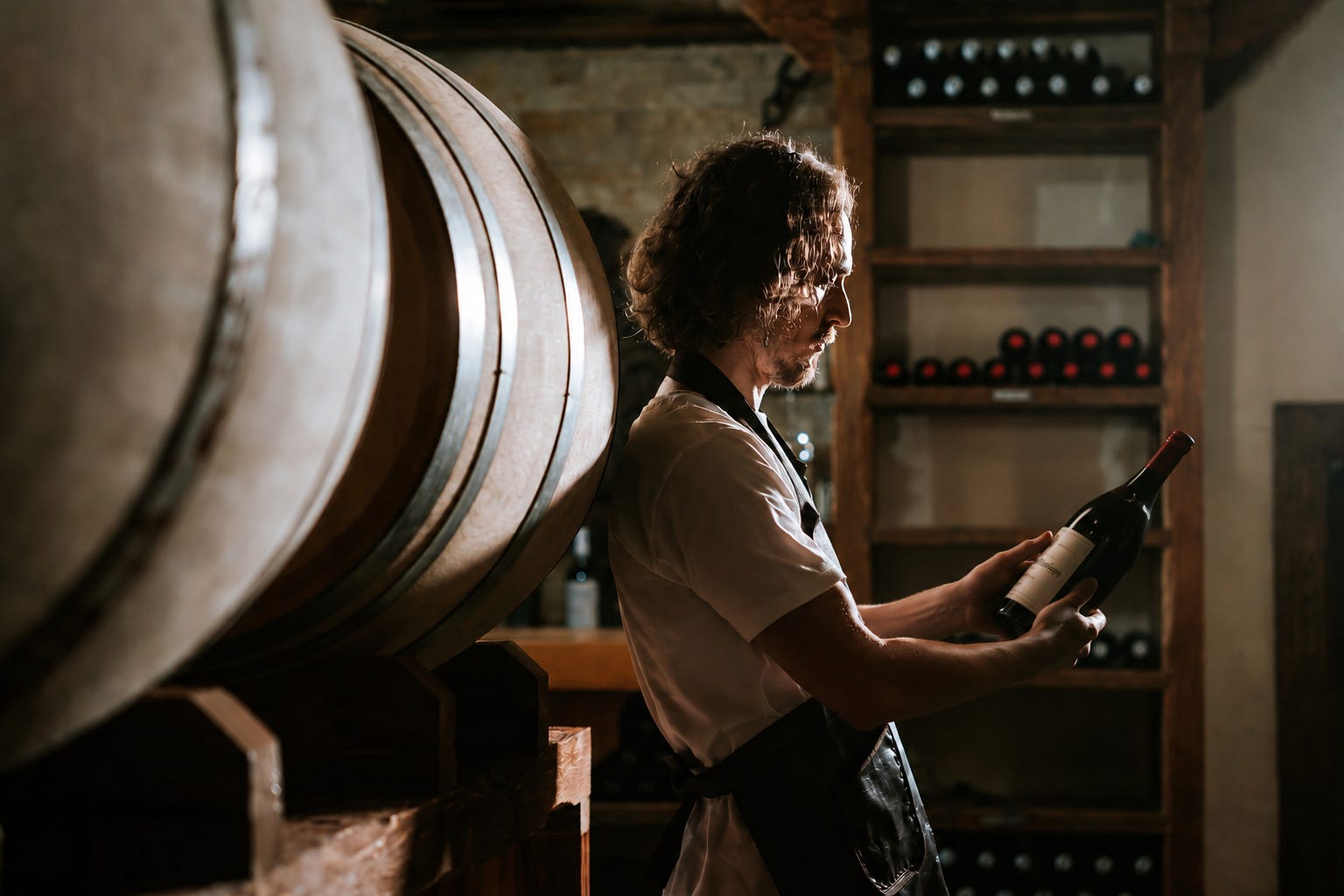
A winemaker inspecting a bottle of wine in his cellar
Tasting wine, especially from renowned regions like Burgundy, often attracts controversy due to the subjective preferences, complex terroir, and varying winemaking practices. Burgundy’s wines are known for their distinctiveness, but the classification system used here often sparks debate on quality versus price. Burgundy has its tensions.
Some question whether the classification system rewards reputation more reliably than it rewards what is actually in the glass. Others debate the role of the winemaker’s hand — whether the careful use of oak or the shaping of fermentation enhances a wine’s complexity, or pulls it slightly away from the purity that Burgundy has always promised. And then there is climate: as growing conditions shift, so too does the conversation about what a Burgundy wine should taste like, and whose influence — the land’s or the cellar’s — deserves the greater credit.
Most of us approach wine tasting the way we approach a test we haven’t studied for. We swirl, we sniff, we attempt to identify notes that have been described to us in books — dark cherry, forest floor, wet gravel — and we might feel vaguely fraudulent when we cannot locate them. We assume the problem is our palate; but it is usually our method.
Burgundy, in particular, often suffers from the weight of its own reputation. People approach wine tastings with such reverence that they forget the most important thing: tasting is about listening, not a performance with rules. What follows in this article is a practical guide — but as you learn more you will develop your own method, and that’s part of the experience.
Tasting Burgundy wine can be done anywhere; it would be great to be able to do it in a winery in Burgundy, or perhaps even the domaine or vineyard where the grapes were grown. Maybe in the cellar of a collector or merchant. Experiences like these are on offer in the region if you are considering a Burgundy vacation. But it’s not essential to make the trip. You can do wine tasting in the comfort of your own home.
Just remember: Most people taste Burgundy as if it’s a test of knowledge. It isn’t—it’s an exercise in attention, and there are three common mistakes that people make most often…
Mistake #1: You Start Tasting the Wine Too Late
The most commonly skipped step in tasting is the simplest. When you have poured your wine, look into the wine glass. Hold it up to the light and observe the color with genuine attention.
A young Pinot Noir from the Côte de Nuits will often be pale ruby, lighter than most people expect — certainly lighter than a young Cabernet Sauvignon. A Chambolle-Musigny may appear almost translucent at the rim. A Gevrey-Chambertin, from a warmer vintage or a site with heavier soils, will be deeper ruby with garnet tones.
White Burgundies tell their own story: a young Chablis is almost colorless with green highlights; a village Meursault carries gold; a mature Puligny-Montrachet premier cru will shift to deep amber.
Color sets expectation. It also tells you something about the vintage, its location of origin, and the age of the wine before you have tasted a drop. Skipping this step is a little like opening a book at the middle chapter.
Mistake #2: Focussing on Naming Aromas When Burgundy Wine Tasting
Wine writing has done the tasting ritual a disservice by loading the nose with so many descriptors that new drinkers spend their time searching for specific fruits, rather than simply appreciating what is there. The nose of a Burgundy is a conversation about aroma, not a series of tick-box exercises.
Pinot Noir typically offers some combination of red and dark fruit — cherry, raspberry, blackcurrant — alongside floral notes that can range from violet to rose, and earthy or savory undertones that often emerge with aeration (adding oxygen to the wine): forest floor, truffle, a hint of mushroom in older wines.
Chardonnay, especially in wines from the Côte de Beaune, offers stone fruit, almonds and a certain creaminess, with secondary notes of toast and vanilla in wines that have had oak used in their winemaking process. Chablis Chardonnay, however, is a different experience entirely: citrus, green apple, and the signature flinty, saline quality that is easier to recognize once you have encountered it a few times.
The most useful thing you can do at this stage is not name what you smell, but simply notice whether it is appealing, whether it opens and changes as the wine sits in the glass, and whether it suggests lightness or depth.
Swirl gently, wait, then return. The nose of a good Burgundy is rarely the same on first encounter as it is two minutes later.
Mistake #3: Rushing Things
The single most common mistake in tasting Burgundy — or any wine for that matter — is moving too quickly. It’s exciting getting a new bottle of wine home that you have carefully chosen, but don’t rush in. Take a small sip. Before you swallow or spit, let the wine sit in your mouth and cover your taste buds; try to notice three distinct phases to your tasting experience.
The attack is what you taste first, within the first second or two: the initial fruit impression, the weight of the wine, the first indication of acidity. In a young Gevrey-Chambertin, the attack tends to be firm and structured; in a Volnay, it is usually lighter and more silky. This is where you begin to understand the appellation.
The mid-palate is what develops as the wine warms and spreads. Tannins, in red Burgundy, become more apparent here — though Pinot Noir’s tannins are characteristically fine and integrated rather than “grippy”. Acidity in white wine, which can seem aggressive on first contact, often resolves into something refreshing and precise. This is also where oak influence, if present in the winemaking process, makes itself known: a toasty, vanilla-infused warmth that should complement rather than dominate.
The finish is the length and character of flavor that remains after you have swallowed. Great Burgundy is defined in many ways by its finish — long, complex and evolving, sometimes showing flavours that were absent on the attack. A short or abrupt finish is often a more reliable signal of a wine’s limitations than anything on the nose.
What Are You Actually Evaluating When Tasting Wine?
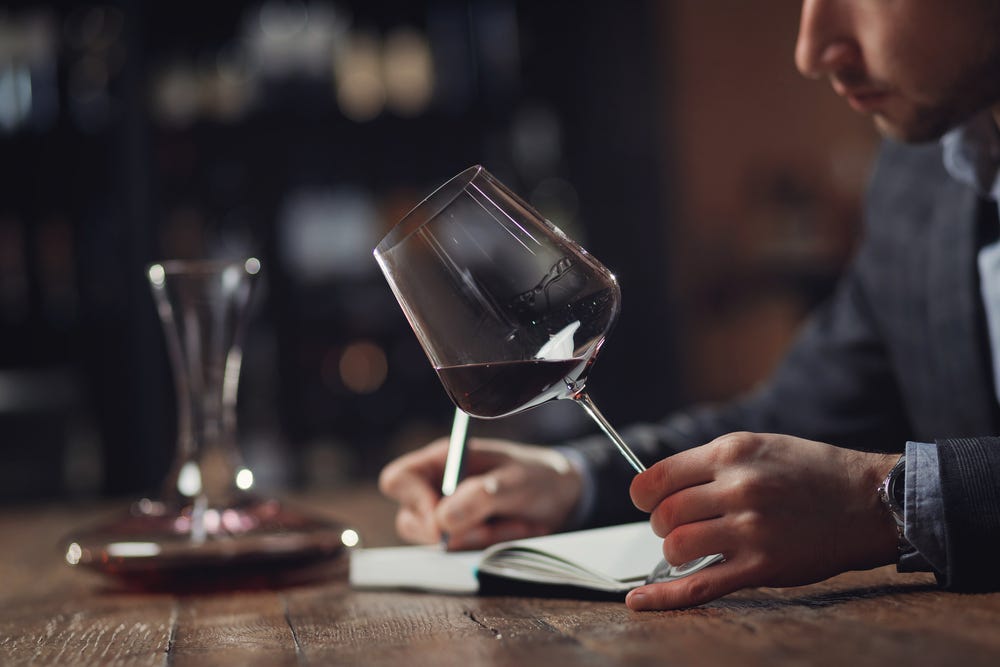
Sommelier holding a glass of red wine, tasting and making notes on a degustation card
Good tasting is not about identifying exotic flavours. It is about assessing balance. Does the fruit feel proportionate to the acidity? Is the oak integrated or intrusive? Are the tannins — in red wines — present but fine, or coarse and drying? Does the wine feel complete, or does it taper off before you have finished thinking about it?
These questions require no training to begin asking. They require only honesty and patience. The wines that answer them well are the ones worth seeking out, regardless of their appellation or their price. Explore, too, which other wines that particular winemaker makes.
That said, if you do want to explore the tasting process further there are many formal tasting opportunities in-region. You could centre your vacation around a wine tour if you want to do a deep-dive into the region and its wines. There are also online tasting sessions that are run by some retailers and specialists that you can join without the need for travel.
Think how you might describe the differences you’ve picked up between wines - using a vivid image by saying “it’s like going from silk to wool” can help you and others to remember and interpret what you were picking up.
Finally, don’t ever be afraid to ask questions. It’s how experienced wine drinkers develop their sense of taste, get to know common wine terms and tasting etiquette, and come to better understand the tasting notes you may be given.
Bourgogne Wines Palate Advisor
Remember: the goal isn’t to get Burgundy ‘right.’ It’s to stay with the wine long enough for it to show you something.
The burgundywine.com Palate Advisor is designed for exactly this kind of exploration — guiding you toward wines matched to specific style preferences rather than prestige.
Please share, subscribe or comment if you liked this article. If you find that Burgundy’s tasting language is new territory, then the burgundywine.com team is available to help you navigate it - and above all, to enjoy wine.
The point about the mid-palate being where the winemaker's hand shows itself is where I think expectations are shifting most right now. As generational succession brings younger winemakers into estates across the Côte d'Or — many with lower-intervention instincts — the baseline for what 'integrated oak' should feel like is quietly moving. Worth calibrating by producer generation, not just by appellation.
Wine scribes have called Bordeaux the 'Queen' of wines and Burgundy the 'King' of wines. Could you comment on this statement and why you do or don't support it?