


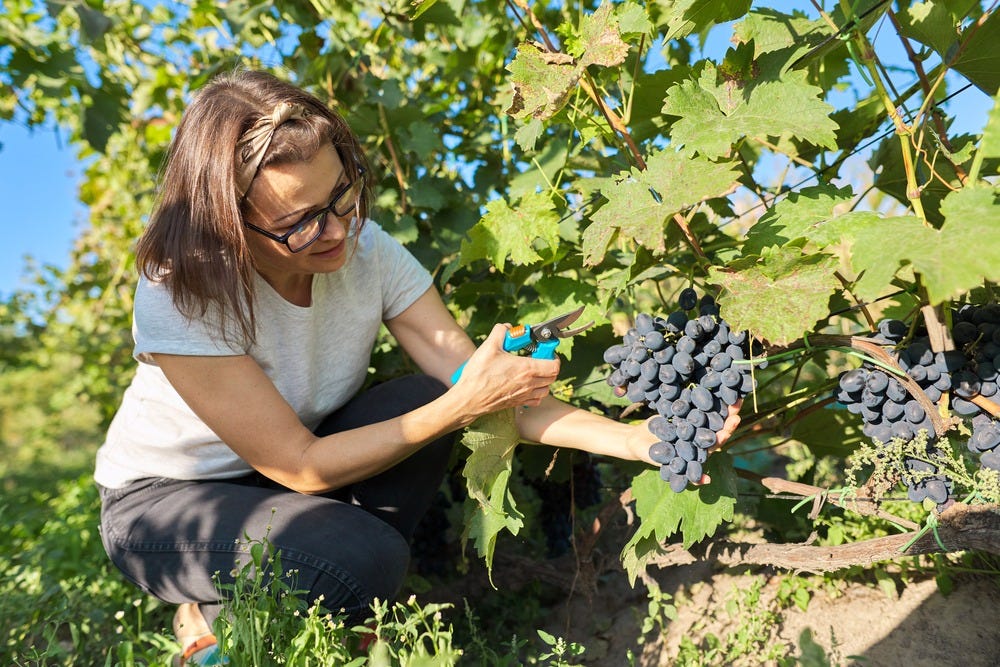
Female farmer and winemaker picking a bunch of grapes in the vineyard
There is a version of Burgundy’s history that reads as an almost exclusively male story — the monks, the dukes, the celebrated vignerons whose names have been attached to the same parcels for generations.
That version of the story is incomplete.
Walk into most discussions of Burgundy and you will hear the same names repeated, usually almost entirely male. But women have worked the vineyards of Burgundy for centuries, and in other winegrowing regions of France too. What has changed, in recent decades, is that they are increasingly the ones making the decisions — about how to farm, how to vinify, and what kind of wine they want their land to produce.
This shift is not a correction so much as a recognition. These are women shaping their local wine industry and collective reputation.
Once almost invisible in a region long shaped by inheritance traditions and patriarchal norms, women winemakers in Burgundy have risen from just a handful at the turn of the 21st century to an estimated 10–15% of the region’s roughly 4,000 producers today.
Many females in the industry have gained international recognition for their strong embrace of organic and biodynamic practices, and a more collaborative culture in what was once an insular industry. While still underrepresented, women are helping redefine Burgundy’s identity, bringing both innovation and renewed attention to quality, sustainability, and vineyard expression.
In this article we look at some of the best, and how their innovation is helping to redefine this region, now and for future generations who may follow in their footsteps.
Perhaps the best known is Ludivine Griveau, the chief winemaker at the Hospices de Beaune. It is a great story in itself which we will cover at another time. But to illustrate the growing influence of women winemakers, we choose to focus on a few passionate, perhaps lesser known or under the radar, winemakers.
Their work stands on its own—but taken together, it also tells you something about where Burgundy is heading. To be a “woman in wine” in Burgundy, your wines must speak for themselves in terms of quality — and the wines now being made by women winemakers are among the most compelling reasons to pay attention to the Burgundy wine region right now.
A New Generation of Women Winemakers Hone Their Craft
Finest Female Burgundy Winemakers and Their Wine Styles
Agnès Paquet, Auxey-Duresses
The Paquet family has held vine parcels in historic Auxey-Duresses since the mid-1950s, renting the land to local vignerons until the early years of this century. When the family decided to sell, Agnès stepped forward to protect her heritage. She studied her craft with the same rigor she has since applied to her viticulture — organic principles, indigenous yeasts, manual harvesting — and has built a domaine of 13 hectares that is now considered one of the most innovative in its appellation.
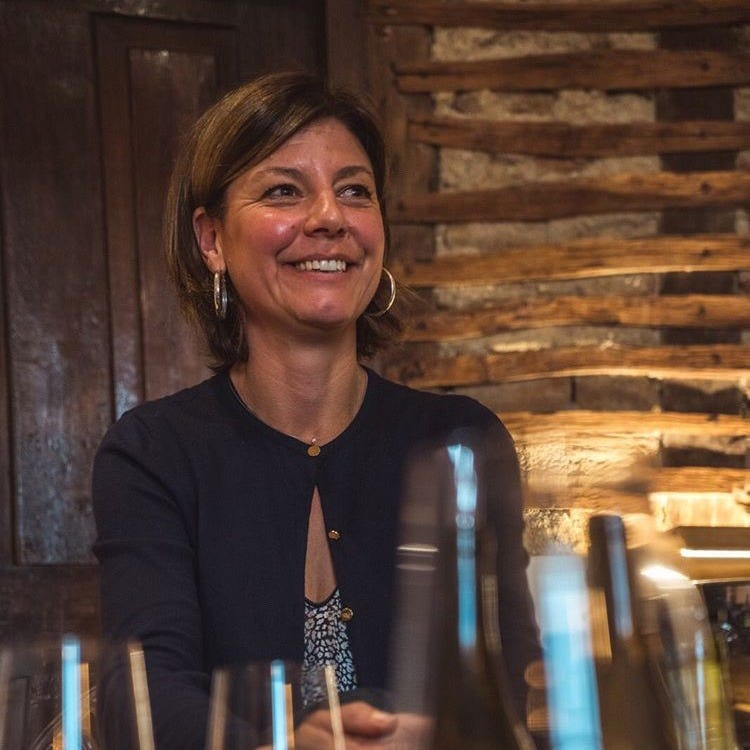
Burgundy winemaker Agnes Paquet of Auxey-Duresses
Auxey-Duresses sits in a side valley off the Côte de Beaune, cooler than its neighbours and historically underestimated. Agnès is a winemaker who uses that coolness to her advantage.
Her whites — particularly the Auxey-Duresses Blanc — are models of precision and minerality, and possessed of a quality of freshness that many more celebrated appellations would envy. Her reds, including an Auxey-Duresses Rouge made with a high proportion of whole-bunch Pinot Noir fruit, carry a delicacy that belies the appellation’s reputation for producing austere wines.
Her wines enjoy growing acclaim, but she is also one of the more thoughtful voices on the question of what the Côte de Beaune’s lesser-known appellations can become.
“The terroir is just as rich and diversified as that of the Côte d’Or,” she has said. This is not boosterism. It is something she demonstrates, bottle by bottle, each vintage.
The Oudin Sisters, Chablis
Christine Oudin left Paris in the 1980s to raise a family and tend a small inherited vineyard near Chablis. Today, her daughters Nathalie and Isabelle run the domaine and its winery, and are regarded by many observers as among the finest producers in the appellation.
Nathalie trained in biology and oenology; Isabelle came from the tourism sector before committing fully to the family business. Their approach across their portfolio is methodical and promotes sustainability: no herbicides since 1985, no oak barrels for their village and Premier Cru Chablis, a harvest-to-harvest focus on letting the limestone and the climate speak without interference. The result is Chablis of unusual purity — wines where the Kimmeridgian character of the soil comes through with a directness that heavier production methods tend to obscure.

Burgundy winemakers the Oudin Sisters and their Chablis wine
Their Vaugiraut Premier Cru, from parcels of Chardonnay planted by their grandparents, is a consistently rewarding wine: it has a stony, floral taste, and with that particular saline persistence that identifies great Chablis. It is the kind of wine that makes the case, quietly and without effort, for the Oudin approach to winemaking - one of the most impressive in France today.
Stéphanie Saumaize, Pouilly-Fuissé
Stéphanie Saumaize and her partner Pierre Laroche established Domaine du Château de Vergisson estate in 2012, bringing together two families of grape growers from the villages of Solutré and Vergisson — the twin limestone outcrops whose profiles define the skyline of southern Burgundy. In a little over a decade, they have become one of the names that savvy buyers of Mâconnais whites follow keenly.
The Pouilly-Fuissé appellation received Premier Cru status for 22 of its climates in 2020, a recognition long overdue in a region often dismissed as Burgundy’s more accessible, less serious southern extension. Stéphanie’s wines suggest that this reputation was always poorly calibrated. Her Pouilly-Fuissé “Sur la Roche,” made from vines planted by Pierre’s great-grandfather, combines richness with a mineral drive that makes it easy to understand why the appellation is gaining ground with collectors accustomed to paying considerably more for wines of comparable complexity, who want these wines in their cellar.
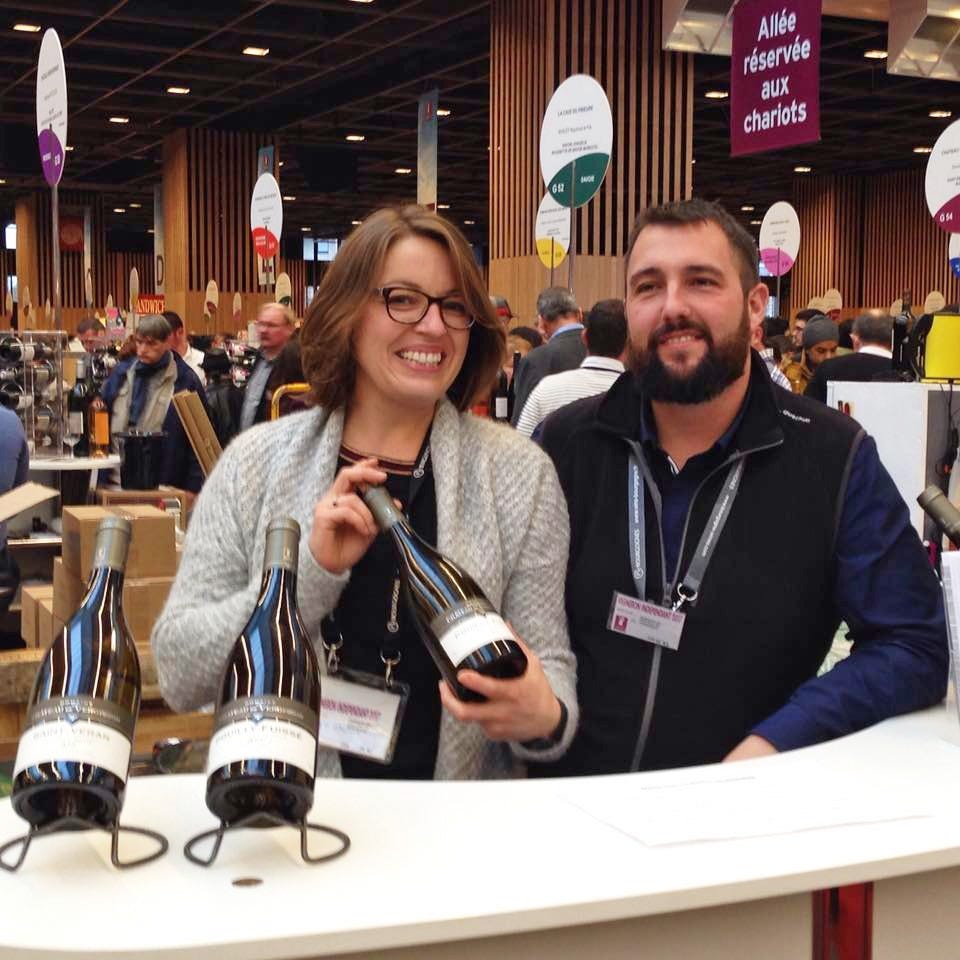
Stephanie Saumaize, Burgundy winemaker
What These Burgundy Wine Producers Have in Common
Each of these female winemakers works differently — different appellations, different techniques, different relationships with oak, aging and élevage. What they share is a commitment to the vineyard as the source of quality, and a refusal to make wines that apologise for their origins.
They’re all adding something new and exciting to this region’s wine industry. Agnes is capitalising on her cooler vine locations whilst others struggle in the warming climate; the Oudin sisters are making huge strides in sustainability with old vines; and Stephanie Saumaize has brought two whole families of grape growers together and helped secure Premier Cru status for multiple appellations.
There is a broader point here, too. Burgundy is a region that rewards attention to people as much as to place. The hierarchy of appellations matters, but it is not the whole story. Some of the most memorable wines being made in the region right now are being produced by people working outside the most celebrated villages, in appellations that still offer value precisely because the world has not yet caught up. Agnès Paquet in Auxey-Duresses, the Oudin sisters in Chablis, Stéphanie Saumaize in Pouilly-Fuissé — these female-led domaines are not footnotes to the Burgundy story. They are part of its most interesting current chapter.
Discover The Wine of These Female Winemakers
If you’re curious about how wines from pioneer winemakers Domaine Agnès Paquet, Domaine Oudin, and Château de Vergisson taste, they are available through burgundywine.com.