


By Stephen Lenehan
Contributor to the The Burgundy Outlook
Edited by Jonathan Finch
SPONSORED LINKS
The Burgundy Outlook is an independent weekly publication managed by Editor Jonathan Finch. This specific edition was researched and written by contributor Stephen Lenehan. This newsletter is distributed free to readers thanks to a commercial sponsorship from burgundywine.com. All editorial coverage, wine evaluations, and market strategies presented in this article are determined solely by the author and remain entirely independent of sponsor influence.
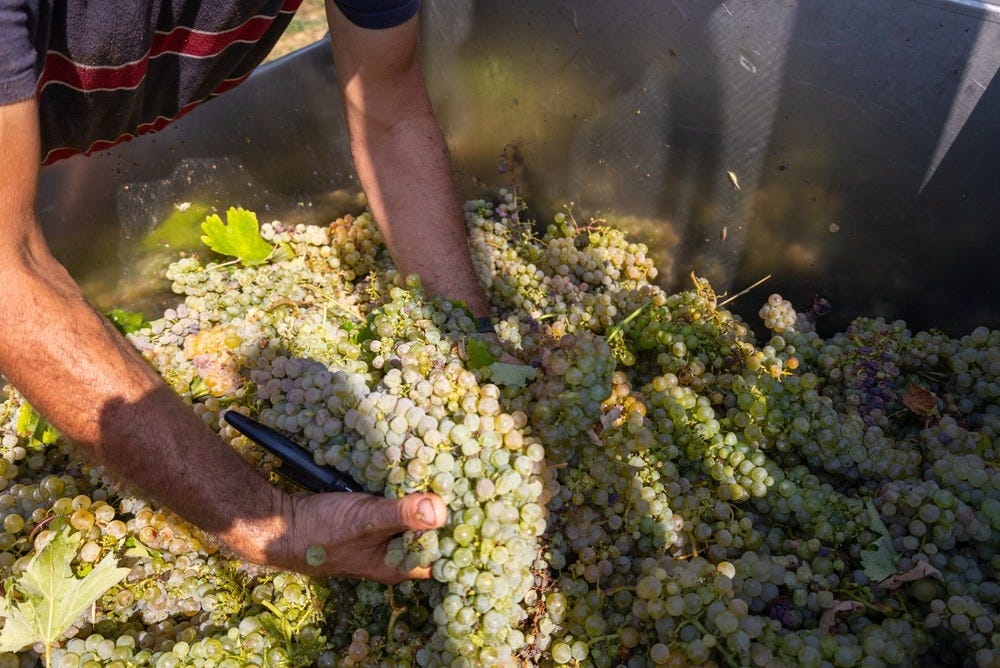
Picking finished in the Côte d’Or between 10 and 12 September, and the cellars have been full ever since. On 23 September the Comité des Vins de Bourgogne gave its first assessment in Beaune. Burgundy had just brought in its earliest harvest ever recorded, the crop was smaller than usual, and the Comité thought the quality of what was picked was remarkable. The official volume figure won’t be published until mid-November, so what follows is what can be said with confidence today, and also where the evidence thins out.
The Earliest Wine Harvest on Record, 2026 is Now Complete
Crémant de Bourgogne grapes were being picked in the Mâconnais on 8 August, five days earlier than the previous record date, set in 2022. Back in early July, growers were already predicting Crémant picking in the first week of August. Still-wine picking started around the middle of the month, and after such an early harvest date, plenty of domaines across the region had wrapped up before September arrived. A few Côte d’Or vineyards held out until the second week of September. To see how far the calendar has moved, the red harvest at Beaune historically averaged about 27 September from the late Middle Ages through to the late 1980s.
Winter was mild and wet, and by March the vines were already pushing buds, which left them exposed when the spring frosts arrived. The damage was patchy, and Chablis suffered most. Coulure (the term used to describe a problem where grapes don’t properly develop after flowering and yields are reduced) in late May left many bunches only partly filled, particularly among the white varieties. Then came the heat. A heatwave from 17 June pushed temperatures to about 39°C, the summer brought roughly sixty days above 30°C, and over four months rainfall was 44 per cent below normal, so good ripeness levels arrived well ahead of schedule. Hail hit parcels in June and July. Against all that, the winter rain had at least refilled the soil and the vines had that reserve to draw on.
Burgundy Harvest 2026: A Small Crop, But How Small?
There is less wine this year, and the open question is how much less. Early estimates passed on by the Comité suggest a drop of around 30 per cent against the five-year average. France’s agricultural statistics service, Agreste, published its own forecast in early September. It had Burgundy-Beaujolais about a third down, and it said Pinot Noir in Burgundy was facing losses of more than half. For France as a whole it expected around 34 million hectolitres, among the smallest harvests in thirty years. Alsace had a gentler year: its growers began picking on 18 August and were forecasting about 804,000 hectolitres, only a little below last year’s 840,000.
Champagne fared worse. The same forecast had its harvest down by almost half, which is one reason we suggested recently that the Crémant bargain may not last: fruit is getting harder to find on both sides of the sparkling wine divide. Burgundy’s growers have been here before. Crops in 2021, 2024 and 2025 were all short, and three lean years in five is hard going for a small family domaine, whatever the reputation of the wine.
What the 2026 Harvest is Telling Burgundy Watchers
The reports on quality are more promising, with growers reporting small berries with thick skins and not much juice, a combination that tends to give concentrated wine. The Comité says the fruit came in healthy, with no disease reported and that the juices taste rich but balanced, with deep colour and clear, pure flavours.
Sugar levels rose fast, with one Puligny-Montrachet Premier Cru reported by the Burgundy Report at around 13 per cent potential alcohol level. Acidity is what people are watching most closely. In a hot year the worry is that fast ripening burns it off and leaves the wines flat, and early reports suggest it mostly held up. Commentators have found the fruit ripe but pure during harvest in Beaune, noting that in the Côte de Beaune the malic acid broke down while the tartaric acid, which is more stable, stayed high, and that bodes well for freshness. A Beaune estate owner quoted during picking hoped to reach at least 20 hectolitres per hectare from the Premier Cru and Grand Cru parcels.
All of this describes grapes and juice, and wine is a different matter. Winemaking still has a lot to say, from fermentation to élevage. With fruit this concentrated, decisions in the cellar will count for as much as the vineyard did, such as how much whole bunch to use and how much new oak the wine can take.
Why Comparisons With Other Hot Years Only Go So Far
Comparisons with 1976, 2003 and 2020 are all doing the rounds. Each captures something, whether small berries, early ripening or sheer concentration, but none captures 2026, because Burgundy this year was not one story. Hail hit the Beaune to Pommard stretch in June and Marsannay and Dijon in July. Frost marked Chablis in April. As we reported in August, a higher-elevation vineyard such as Domaine de Cromey’s Le Clos began picking on 25 August, with days in hand that lower sites did not have. Vineyards that missed both hail and frost may make intensely concentrated wine, while those that did not may make very little.
What It Means for Prices of This Vintage and Your Cellar
Less wine does not automatically mean higher prices. The Comité has asked winemakers not to raise prices for the 2026 vintage, because demand is soft: still-wine bottle sales fell 1.3 per cent in the year to late July, red wine sales fell 4.9 per cent, and sales of Côte d’Or Grand Cru wines fell 12 per cent. The Comité can only advise. Each domaine and négociant sets its own prices, and a winemaker who has lost a third of the crop has a hard decision to make about the rest.
Follow the domaine, not just the year. With so much variation between plots, the name behind the bottle tells you more than the vintage printed on it.
Ask about allocations early. Smaller crops mean smaller allocations, and the best-loved cuvées may be offered in small quantities.
Expect the colors to differ. Coulure cut the white crop, while Pinot Noir took the heaviest losses in the official forecast, so reds and whites may tell different stories.
Be patient with the reds. Reds typically spend a year or more in barrel, so most 2026 reds are unlikely to reach the shelves before 2028.
2026 Vintage Right Now Is One to Watch, Not Judge
So where does 2026 stand at the start of November? It looks like a small vintage and an early one, and it may well turn out to be a very good one for lovers of Burgundy, though nobody can say that with any certainty yet. The official yield figure is due in mid-November. The verdict that matters more will come once the wines have finished fermenting and the winemakers can tell us what is actually in the barrel. We’ll be back with both.
Sponsored
The Burgundy Outlook receives financial support from burgundywine.com to distribute this publication. burgundywine.com works directly with small domaines across Burgundy and follows each vintage through to the bottle. For more information on the 2026 vintage and access to the wines of small Burgundy estates visit burgundywine.com. All commentary in the surrounding article is independently generated under strict editorial guidelines.