


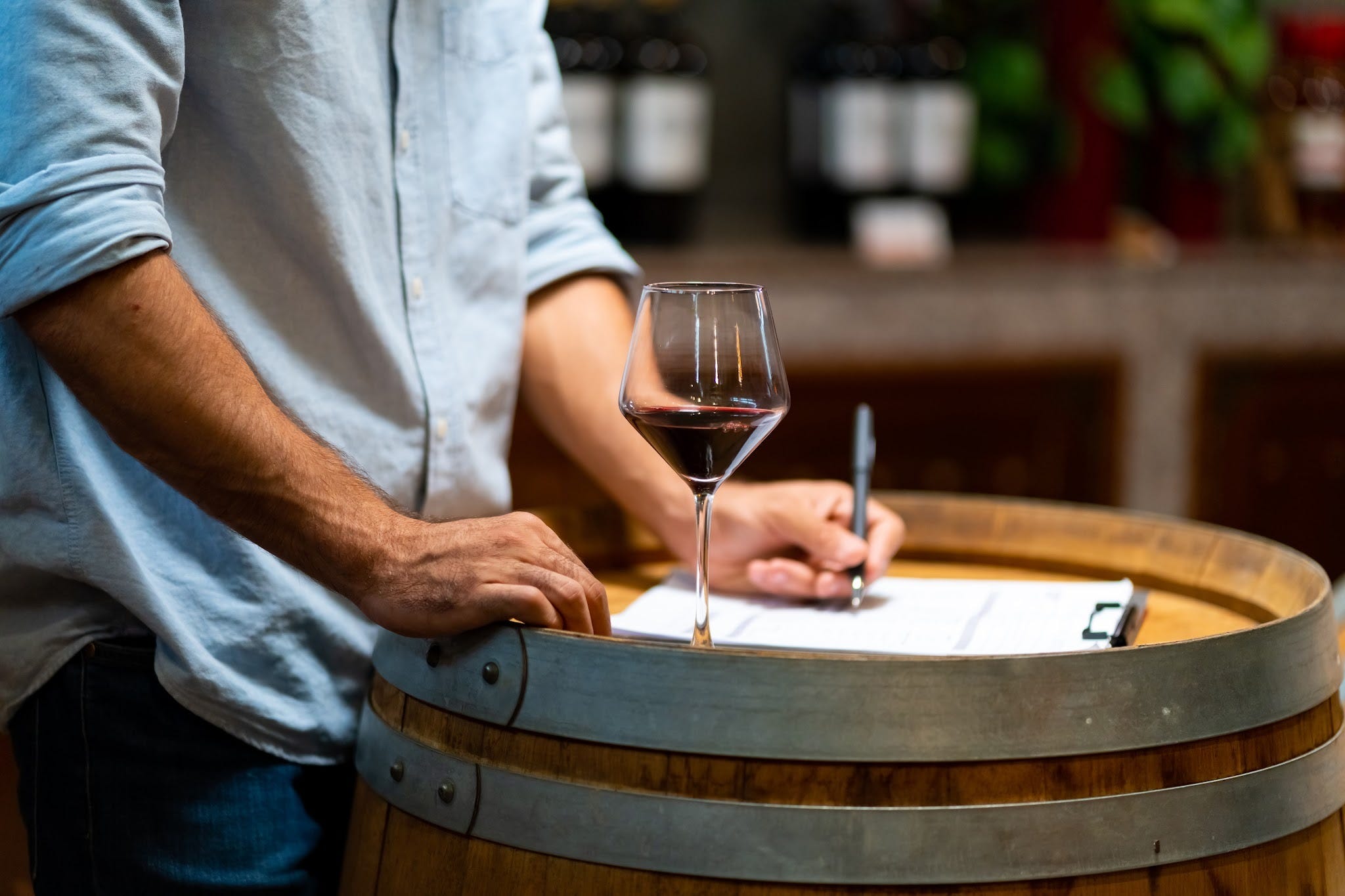
It has been two months since the MICHELIN Guide walked into the Palace of the Dukes of Burgundy in Dijon and did something it had never done in its 125-year history: rated a winery rather than a restaurant. The new wine rating system marks Michelin’s first real step into the world of wine, extending a reputation built almost entirely on Michelin stars into an entirely different kind of accolade — and, for wine lovers trying to navigate an unfamiliar wine region, a new reference point of a kind Burgundy has never really had before.
Ninety-four domaines made the inaugural 2026 wine selection. Less than a quarter of 1%. Nine received the new distinction of Three Grapes, a roll call that reads like a highlight reel of Burgundy’s most storied wine estates — Domaine de la Romanée-Conti, Leroy, d’Auvenay, Roumier, Coche-Dury and Dugat-Py among them. Twenty more took Two Grapes, thirty-three took One, and a further thirty-two were named as Selected — reliable, well-made, but not quite at the summit. Roughly 3900 were left out in the cold.
Michelin Grape: A Controversial New 2026 Benchmark in Winemaking

Understandably, the list has not been well-received in all quarters. Within days, Domaine Arnoux-Lachaux in Vosne-Romanée publicly asked to be withdrawn from the guide altogether after receiving only One Grape.
It is the first sign of what will likely be an ongoing tension: a wine region that has spent a thousand years building its own hierarchy of quality is now being measured, in parallel, by an outside wine guide using a five-point methodology built for restaurants — one that arrives only a year or so after Michelin acquired Robert Parker’s Wine Advocate, folding one of wine’s most influential scoring traditions directly into its own. Bordeaux is expected to be the next region to receive the same wine rating treatment, which will make for an interesting comparison once it does.
Whatever you make of the ratings themselves, the criteria Michelin inspectors are trained to evaluate wine against are genuinely useful — not because they replace your own palate, but because they give it better questions to ask. Here is how to taste a glass of Burgundy the way an inspector would.
Five Things a Michelin Guide Wine Inspector Is Actually Looking For
Michelin’s wine inspectors — a team of former sommeliers, wine critics and winemaking professionals employed directly by the Guide — assess every estate against five fixed criteria, applied the same way across the Côte de Nuits, the Côte de Beaune and the Côte Chalonnaise as anywhere else in the world. Understanding them turns a fairly abstract rating system into a genuinely practical tasting framework for identifying exceptional wine, wherever it happens to be made.
Quality of agronomy: the health of the soil, the balance of the vines, and the care taken in the vineyard itself — all factors that directly shape wine quality, assessed on site long before a single grape is picked.
Technical mastery: the precision and discipline of the winemaking — wines that reflect their terroir and grape variety cleanly, without distracting flaws.
Identity: whether a wine expresses genuine personality — the sense of a specific place, and the character of the person who made it — rather than a generic, market-friendly style.
Balance: the harmony between acidity, tannin, oak, alcohol and residual sugar. Get this wrong and a wine feels lopsided, however impressive any single element might be on its own.
Consistency: whether an estate can deliver quality across multiple vintages, not just in the easy years. This is the criterion no single bottle can answer — it requires tasting the same domaine over time.
Tasting the First Four Wine Criteria in a Single Glass
Four of these five criteria can be assessed, at least partially, from one bottle in front of you. The fifth — consistency — takes longer, and we will come back to it.
Start with agronomy, even though it feels like the hardest of the five to taste directly. What you are really checking for is purity: does the fruit taste concentrated and true, or thin and diluted, as though the vine were stretched too far to properly ripen everything it was carrying? Healthy, well-tended vines tend to produce wine with a certain clarity of fruit — nothing muddy, nothing vague.
Technical mastery is the easiest of the five to spot, because its absence is unmistakable. Swirl the glass and check for faults: a whiff of nail polish remover suggests volatile acidity gone too far; a barnyard, wet-dog character points to Brettanomyces; a flat, bruised-apple note suggests oxidation. None of these are necessarily fatal in tiny amounts — some drinkers even enjoy a touch of funk — but an inspector is trained to notice them immediately, and so can you, once you know what you are listening for.
Identity is more subjective, but no less tastable. Ask yourself a simple question: could this wine have come from anywhere, or does it clearly belong to one specific place? A Gevrey-Chambertin that tastes unmistakably of Gevrey — structured, dark-fruited, faintly earthy — is expressing identity. A technically flawless Pinot Noir that could just as easily have come from Oregon or New Zealand is not, however well it is made.
Balance is the one most readers will already have some instinct for, and it rewards slowing down. Take a proper sip and let it sit in your mouth for a few seconds before swallowing. Does the acidity feel refreshing or aggressive? Do the tannins grip and then release, or do they simply grip? Is there a sense that every element — fruit, acid, tannin, oak if present — is pulling in the same direction, or does one element dominate the rest?
Pushing Back: You Can’t Assess Burgundy Wine Consistency in One Glass
Consistency is different from the other four, because no single bottle can prove or disprove it. An estate might make a genuinely brilliant wine in a forgiving, sun-soaked vintage and something far less convincing in a difficult, rain-soaked one. Judging consistency means tasting the same domaine across several years — ideally including at least one vintage that gave everyone in the region a hard time.
This is, in practice, the hardest of the five criteria for an individual drinker to assess on their own, and the one where a specialist relationship pays off most clearly. Keeping a simple record of what you have tasted from a given domaine, vintage by vintage, is the closest a home taster can get to doing what Michelin’s inspectors do over the course of repeated, multi-year visits.
What the First Michelin Grape Burgundy Wine List Reveals — and What It Leaves Out
Look closely at the ninety-four estates on Michelin’s inaugural Burgundy selection, and a pattern becomes clear: nearly all of them were already among the most sought-after, most expensive, and most widely discussed wine estates in the region before Michelin ever arrived. That is not really a criticism of the methodology — it would be strange if a rigorous five-point assessment failed to recognise Domaine de la Romanée-Conti or Coche-Dury.
But it does mean the list, at least in this first edition, tells you relatively little about the smaller, quieter domaines this newsletter spends most of its time exploring: a Fixin domaine working six-century-old vines, a small organic estate in Auxey-Duresses, two sisters farming without herbicides in Chablis.
None of that is a flaw in Michelin’s system so much as a reminder of its scope. A five-criteria framework applied by a small, salaried team of inspectors will always start with the estates that are already easiest to find and easiest to agree on.
The genuinely useful exercise, for a Burgundy drinker, is not choosing between Michelin’s ratings and your own judgement — it is using the five criteria above to sharpen that judgement, glass by glass, whether or not the estate in question has been visited by an inspector yet.
The harder test for Michelin is what happens beyond the estates everyone already agrees are exceptional. Recognizing DRC or Coche-Dury confirms the methodology; finding the quieter producer before reputation and price have already done the work would make the guide much more useful.