


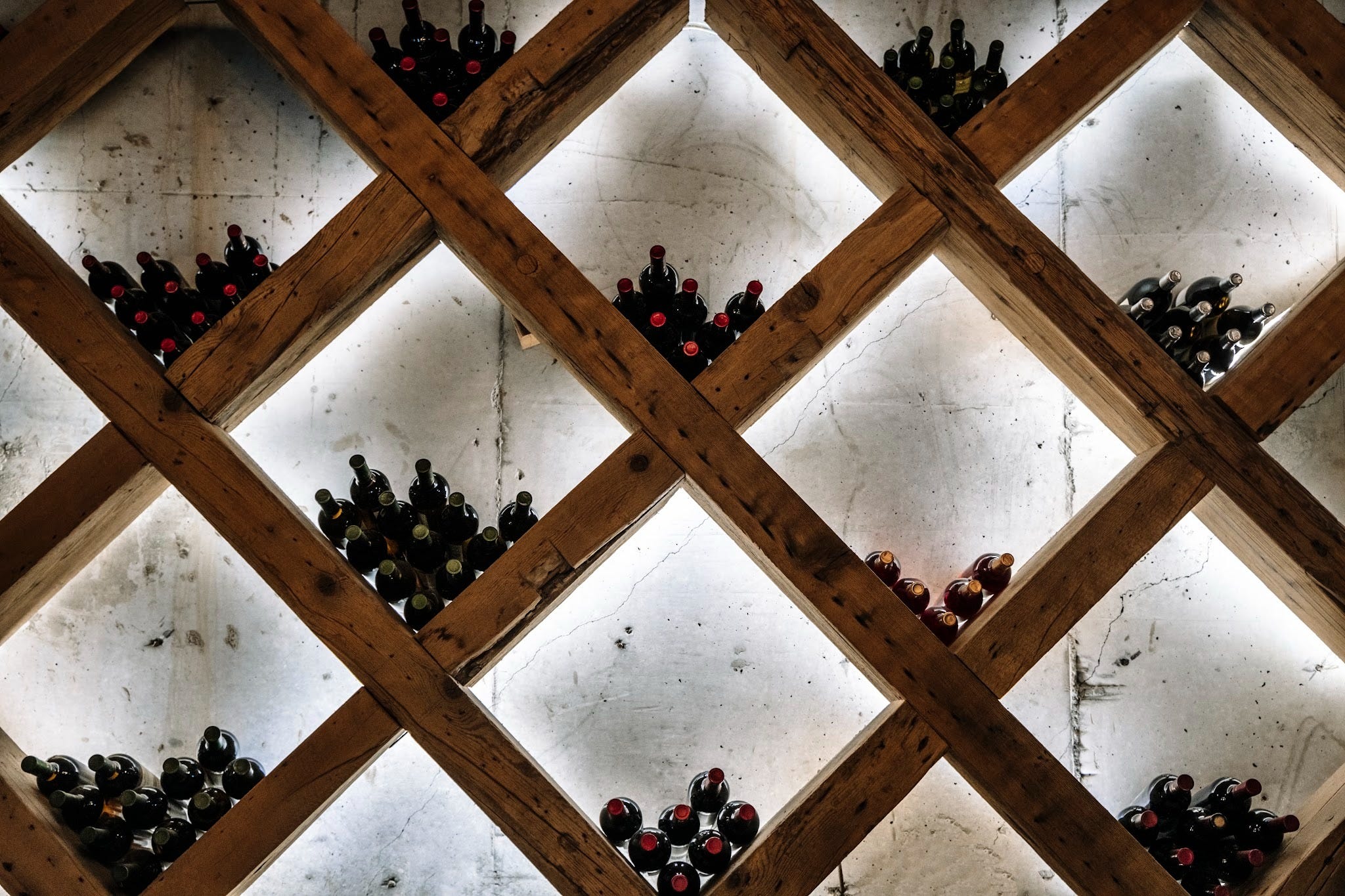
Modern Wine Cellar Display with Wooden Grid and Backlighting
The most common mistake made with good Burgundy is not buying too little. It is opening it too soon. The second most common mistake is waiting so long that the wine passes its peak before anyone thinks to pull the cork. Both errors are easy to understand — Burgundy does not come with a clock — but both are also largely avoidable once you understand what is happening inside the bottle over time, and how to read the signals that tell you when a wine is ready.
This is not a guide to specific drinking windows for specific vintages, though those matter and we will touch on them. It is a guide to the underlying logic — the structural principles that govern how Burgundy ages, and how to apply them when you are standing in front of a rack wondering whether tonight is the right night.
What Happens in the Bottle When You Cellar a Wine?
Wine is not a static liquid. From the moment it is bottled, for both red and white Burgundy, a slow sequence of chemical reactions continues inside the glass — reactions between acids, sugars, tannins, and oxygen that seeps gradually through the cork. These reactions change the colour, the aroma, the texture, and ultimately the flavour of the wine in ways that are broadly predictable if you understand the starting material.
Red Wine: How Pinot Noir Wines Develop With Age
In red Burgundy from the Pinot Noir grape, the key structural elements are tannins and acidity. Tannins — the compounds that create the drying, gripping sensation on the gums and inner cheeks — soften and polymerise over time, gradually becoming less assertive and more integrated. Acidity, which in youth can come across as sharp or angular, becomes the backbone that holds the red wine together as the fruit evolves. A young Gevrey-Chambertin with firm tannins and vivid red fruit will, given time and correct storage, improve with age and develop into something more complex: dried fruit, earth, truffle, leather, forest floor. The tannins will have softened. The acidity will hold the structure. The wine will feel complete in a way it did not at two or three years old.
White Wine: What Happens to Chardonnay Wines As They Age
In white Burgundy from the Chardonnay grape, there are no tannins to speak of, so the ageing mechanism is different. Here, acidity is the primary structural element. A young Meursault with high acidity and tight, mineral fruit will, over five to ten years, develop a golden colour, a richer texture, and a complexity of secondary aromas — toasted nuts, honey, beeswax, a savoury depth — that the young wine only hinted at. Without sufficient acidity to begin with, white wines from Burgundy age quickly and flatly; with it, the wine can develop for decades.
How to Decide Whether to Drink or Age Your Burgundy Wine
In Burgundy, Appellation Is Your First Guide
When it comes to Burgundy, for both red and white wine, the most reliable indicator of a wine’s ageing potential is where it comes from. Broadly speaking, the higher the classification level and track record of the appellation and its terroir (soil and geological features), the longer the wine will benefit from cellaring.
Bourgogne and village-level wines are, with notable exceptions, wines to drink within an optimum time period of three to six years of the vintage. They are made to be enjoyed relatively young, while the fruit is vivid and the wine is approachable. Some village-level reds from structured appellations like Gevrey-Chambertin will reward five to eight years in your wine cellar, but as a general rule, if the bottle in your hand is a regional or village wine, the question is less ‘is it ready’ and more ‘have you been patient enough to let it settle after shipping and storage?’
Premier and Grand Crus: The Longest Aging Potential
Premier Cru wines typically need more time. A well-made Premier Cru from a vineyard in the Côte de Nuits — a Gevrey Lavaux Saint-Jacques, a Chambolle Les Amoureuses — will often be at its best between eight and fifteen years from the harvest. Drinking it at three or four years is not wrong; you will simply be tasting something less complete. The tannins will be more present, the secondary aromas undeveloped, the finish shorter than it will eventually become.
Red wine aged inside an oak barrel - where magic is made
Grand Cru wines are built for the longest journeys. The best wines in this category such as Charmes-Chambertin, Musigny, Chambertin and their peers, are wines where patience is not optional. Opened too young — within five years of a structured vintage — they are often disappointing: closed, austere, dominated by tannin. Given ten, fifteen, twenty years, a great wine like this can achieve a complexity and completeness that makes every year of waiting feel justified. The white Grand Crus of the Côte de Beaune — Le Montrachet, Corton-Charlemagne — follow the same logic for different structural reasons.
How the Vintage Shapes the Wine Timeline
The same appellation from a different vintage can have a dramatically different readiness timeline. This is one of Burgundy’s defining characteristics and one of the things that makes the region so endlessly interesting to follow over time.
Warmer vintages tend to produce wines with riper tannins, higher alcohol, and less aggressive acidity. These wines are often more approachable young — the 2020s, for instance, showed a ‘crunchy’ tannin character that made them seductive earlier than their concentration suggested they needed. Cooler, more structured vintages — the classic profile of a great Côte de Nuits red from a year like 2015 or 2019 — produce wines with tighter tannins and more pronounced acidity that need considerably longer to resolve.
The 2020 vintage is a useful current example. Winemakers across the Côte d’Or wine region described wines of exceptional freshness and balance — high tartaric acidity allied with ripe, concentrated fruit. Village and regional 2020s are drinking beautifully now. Premier Cru 2020s are rewarding those who have been patient, though they will continue to develop. Grand Cru 2020s are still in their infancy, despite how appealing they taste at this stage.
How to Read a Burgundy Wine That May Be Ready
If you are standing at a rack with no vintage notes to hand, a fine wine from a good domaine can tell you something — provided you know what to look for in the glass.
Colour is the first signal. Red Burgundy shifts from bright ruby through garnet to brick and amber at the rim as it ages. A wine showing significant amber or orange at the edge is a wine in its later development — not necessarily past it, but not a wine to cellar further. White Burgundy deepens from pale straw through gold to amber; deep amber in a white is a sign of considerable age and, depending on storage conditions, may indicate either a beautifully mature wine or one that has begun to tire.
The nose is the second signal. A closed, muted nose on a red Burgundy that should be ready often means the wine is in a ‘dumb phase’ — a temporary period in its development, typically between three and seven years from the vintage, when the primary fruit has faded and the secondary aromas have not yet fully emerged. If a wine smells ‘closed’ rather than evolved, decanting it for two to three hours can help. If it smells oxidised — flat, vinegary, or cardboard-like — it has been opened too late, or stored poorly.
The palate is the final confirmation. A wine that is ready to drink will feel harmonious: the tannins will seem integrated rather than grippy and obvious; the acidity will be present but not aggressive; and the fruit character complex and layered rather than simple and primary. The finish will be long. These are not mystical qualities; with practice, they become as recognisable as any other aspect of tasting.
Is Your Wine Ready to Drink? A Practical Rule of Thumb
When in doubt about whether to drink your Burgundy, open a bottle earlier than you think you need to, and note what you find. A wine that reveals itself too young is a wine that tells you how much longer it needs. A wine opened at exactly the right moment is one of the most instructive and satisfying experiences in all of wine. The only way to develop the instinct for timing is to pay attention across many bottles, many vintages, and many appellations — and to keep notes on what you discover.
There is also the pragmatic argument: a good bottle of Burgundy wine opened slightly too young is still a very good bottle of wine. To put it another way: the cost of opening a bottle of wine you love a year early is lower than the cost of cellaring it until it has passed its best. When genuine uncertainty strikes, err toward opening.
Wonderful piece…I find that age worthy quality wines tend to be good all the time. Even young grand cru burgundy opened 3-5 years from vintage can be quite enjoyable when given a lot of air with the appropriate expectations. If anything, buying Mutiple bottles is key to both checking the evolution and honing your individualized palate/taste preferences.
The final point stayed with me: the cost of opening a bottle slightly early is usually lower than the cost of waiting until it has faded. I wonder whether Burgundy collectors sometimes overvalue patience because cellaring itself has become part of what signals seriousness.