


Chablis has been analyzed, praised, and mythologized countless times—and the Côte de Beaune has hardly escaped the same fate. Between them, they dominate nearly every serious conversation about Chardonnay and the heights white wine can reach. So rather than add to the familiar chorus, this piece takes a different approach: not another ode, but a head-to-head. By setting these two benchmarks side by side, we can better understand how wines from the same grape diverge so dramatically—and why, despite those differences, both are so often seen as defining the pinnacle of white wine.
The Burgundy Difference
Ask someone to picture a white Burgundy (Bourgogne in French) and they will likely imagine one of two things: a lean, bone-dry wine with a mineral edge that feels almost like cold stone, or a richer, more rounded wine with warmth and depth.
Both are Chardonnay. Both are Burgundy.
But they come from places so different in character that they might as well be two separate regions — because, in a meaningful sense, they are.
Chablis sits at the far northern tip of Burgundy, closer in latitude to Paris than to Beaune. The Côte de Beaune, which produces Burgundy’s greatest white wines — lies some 100 kilometres to the south. That distance, modest on a map, creates a divergence in wine style that is among the most instructive comparisons in the world of wine.
And it’s what makes Burgundy stand out among wine regions; from just two grape varieties comes a whole world of wine, thanks to the unique soil, character, people and history of the region.
The Geology of Chablis Burgundy Wine
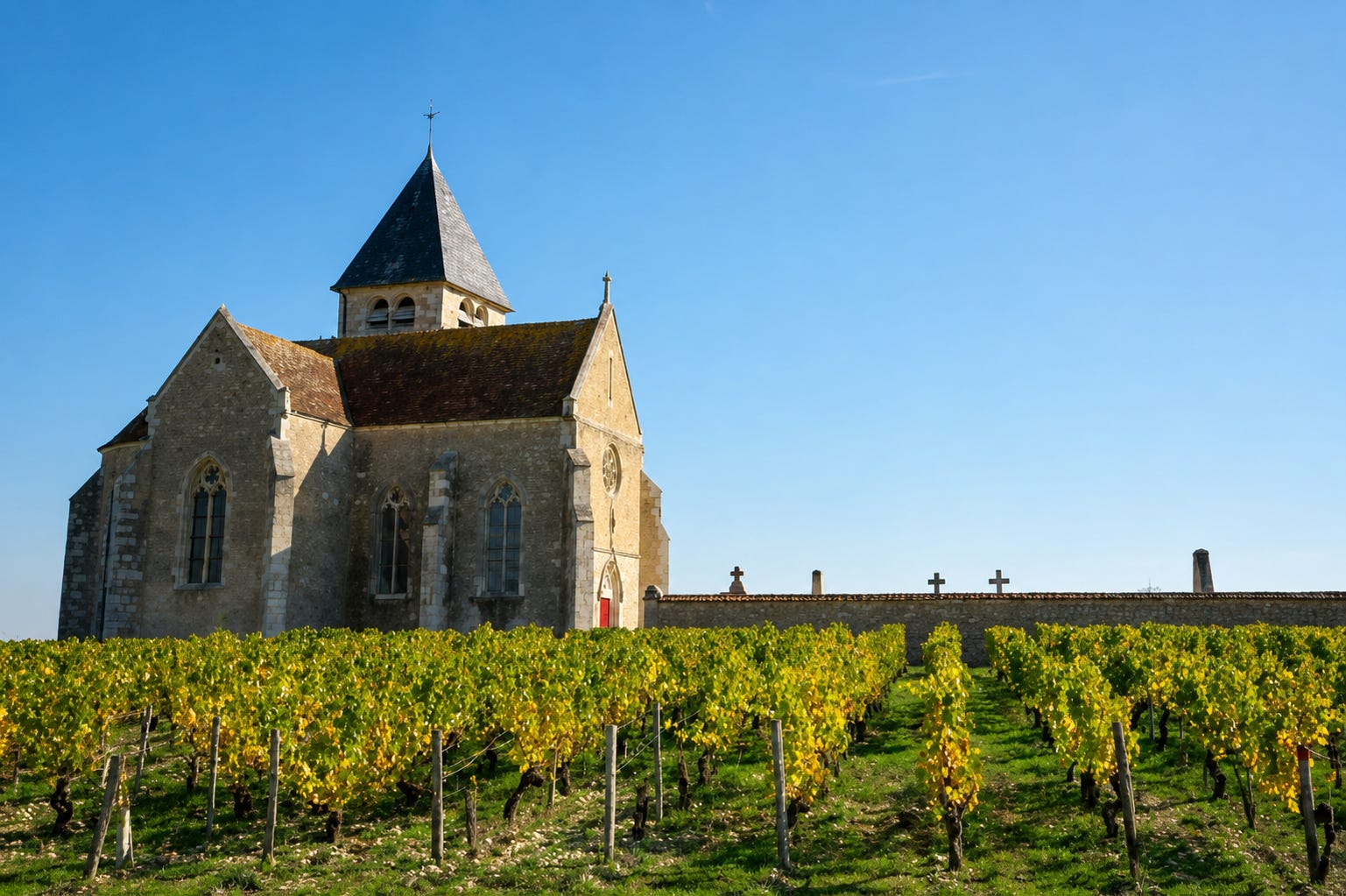
The Sainte-Claire church in Chablis, Bourgogne, France, in autumn
Chablis is defined by its soil in a way that few wine regions can claim. The vineyards sit on Kimmeridgian clay, a limestone-rich formation laid down approximately 150 million years ago when this part of France was an inland sea. The evidence of that origin is visible — small fossilised oyster shells are found throughout this limestone soil — and it is tangible in the wine itself. Chablis carries a marine minerality that is genuinely distinctive: a steeliness, a saline quality, a sensation that is sometimes described as sucking on a wet stone.
This character is shaped equally by climate. Chablis is cool, prone to spring frosts that threaten the harvest annually, and located beyond the warming influence that benefits the Côte d’Or. Chardonnay ripens slowly here, retaining acidity that further sharpens the ‘edge’ that is so beloved in Chablis wines.
Wine of the Côte de Beaune: Another Face of Chardonnay
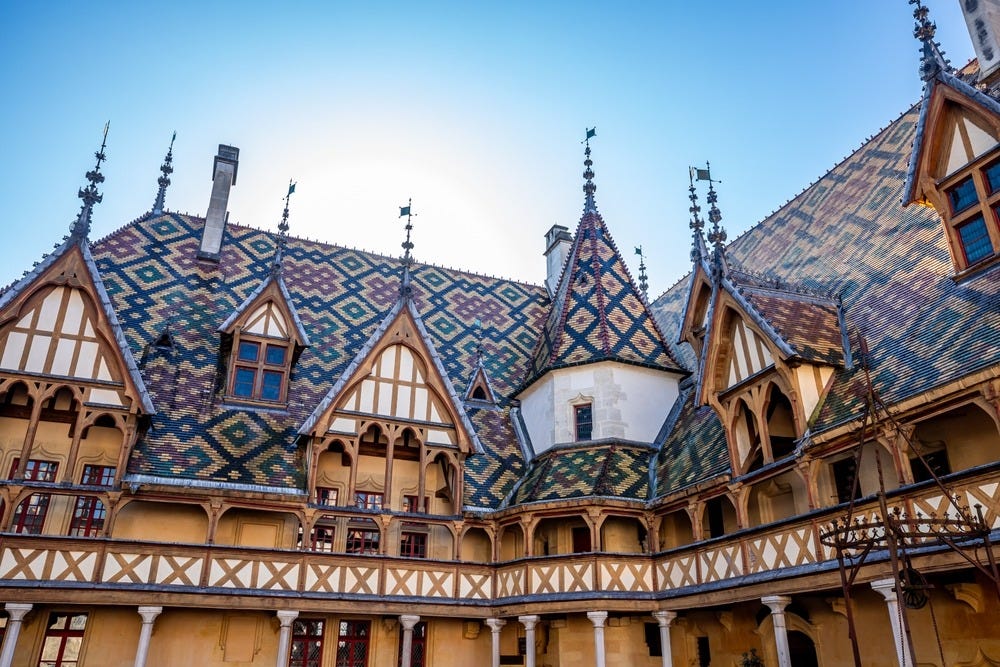
Exteriors, roofs and glazed tiles of the hospital for the poor, Hospices de Beaune
Drive south and the landscape changes. The terroir around Beaune is a mosaic of limestone slopes, each with subtly different orientations, elevations, and subsoils. Villages such as Meursault, Puligny-Montrachet, and Chassagne-Montrachet produce Chardonnays of extraordinary range — from the taut, mineral-driven wines of Saint-Aubin to the richly textured, complex whites of Meursault’s Premier Cru vineyards.
The climate is warmer here, allowing Chardonnay to ripen more fully. Winemakers have greater latitude to make choices that shape the wine’s character: the degree of oak influence, the length of time spent on lees, the extent of malolactic fermentation. These decisions determine whether a Côte de Beaune white is lean and focused or broad and generous.
What unites them is quality and a respect for Chardonnay’s capacity to express its precise location. That’s how they can create some of the most precisely textured wines in the world. Producers in the appellation of Saint-Aubin, whose Premier Cru parcels sit above calcite-rich subsoils, make wines with a smoky minerality and precision that rivals villages much further up the prestige ladder.
How to Think About the Chablis vs Cote D'Or Difference
The most useful way to understand Chablis and the Côte de Beaune is not as competing styles but as complementary expressions. Chablis tends to be the wine you reach for before dinner — with oysters, with a simple fish dish, on a warm afternoon when you want something lean and refreshing. Côte de Beaune whites tend to demand a table, a plate - a proper conversation.
Within Chablis itself, the hierarchy matters. This is a region of the world where classification is important. Petit Chablis is known as being accessible and unpretentious. Village-level Chablis is where the minerality becomes compelling. Premier Cru Chablis, from vineyards on the left bank of the river Serein, adds complexity and ageing potential. Grand Cru Chablis — there are only seven climats, all on the right bank of the Serein — produces wines that can rival the Côte de Beaune in richness while remaining unmistakably themselves.
The winemaker Domaine Jean Dauvissat, among others, demonstrates what unoaked Chablis can achieve at Premier Cru level: wines of complete purity, where every flavour traces directly back to soil and sky.
Similarly, the Pinot Noir grape used to make red wines produces wines of very different characters depending on the location of the vineyard, and the terroir in which they grow. Learning to recognize the subtle differences is an important part of appreciating wine from this region. This focus on location and geology also sets these wines apart from other French wine.
Two Entry Points to Understanding Burgundy Wine
For anyone approaching Burgundy white wine for the first time, starting with both regions side by side is one of the best and most enjoyable ways to understand what makes this part of France so unique. Chablis shows you what Chardonnay does when climate keeps it lean and soil gives it direction. The Côte de Beaune shows you what happens when both winemaker and terroir have more room to speak.
Neither is greater than the other. They are different arguments, made convincingly, by the same grape in different places — and that is precisely what Burgundy does better than anywhere else.
In our next article we’ll be looking into the essentials of wine tasting, aroma identification and what surprising things wine lovers may be doing wrong when testing wines from Burgundy.
Continue Your Discovery of the Burgundy Wine Regions and the Chardonnay Grape
Please share, subscribe or comment if you liked this article. burgundywine.com works with more than forty small-production domaines across all four levels of the Burgundy wine hierarchy, including sparkling wine and from all regions of Burgundy including the Côte Chalonnaise and the Côte de Nuits . If you would like to explore what regional, village, Premier Cru and Grand Cru wines taste like side by side, the Palate Advisor tool on the site is a useful place to begin. There is also a Burgundy Wine Club for like-minded wine enthusiasts to join, and lots of other fascinating information about winemaking and the wines of Burgundy.
I love this line: “Neither is greater than the other. They are different arguments, made convincingly, by the same grape in different places…” Great article! I’m enjoying your work!
Interesting and useful article!