


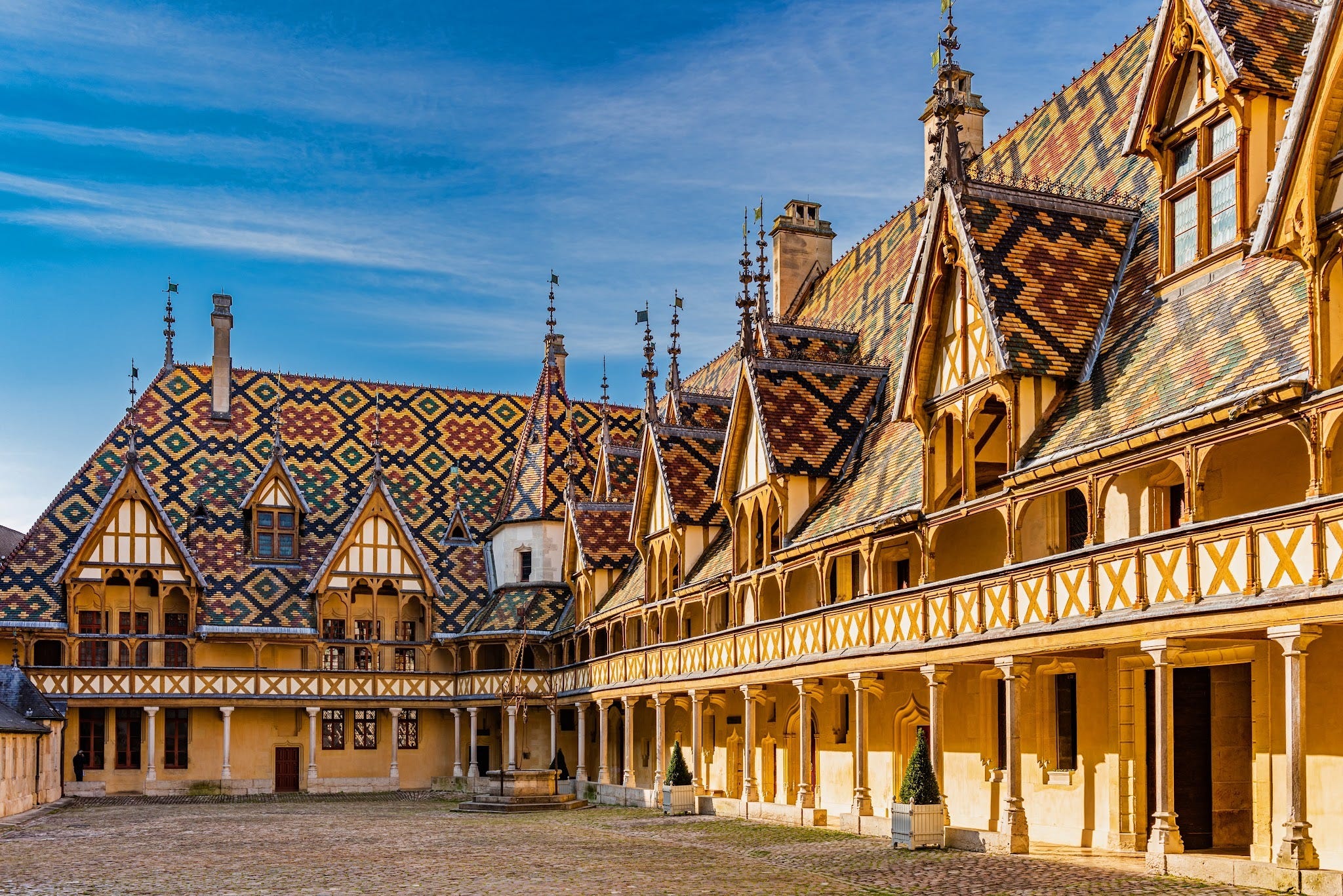
The Hospices de Beaune is a former charitable almshouse in Beaune, France and home of the world’s most famous wine auction
There is a particular kind of confidence involved in buying a wine you cannot yet taste. The barrel is sealed, the wine is weeks old, and the winemaker is offering it to you based on the promise of what it will become. You are not buying a finished product. You are buying a prediction — your own assessment, or a trusted merchant’s, of how this wine will develop over the months and years before it reaches your glass.
This is en primeur: the practice of purchasing Burgundy wine while it is still in the barrel, before it has been bottled and released. It is the oldest and most intimate form of wine buying, a tradition that connects the modern collector directly to the centuries-long relationship between Burgundy’s winemakers and the wine trade — the merchants and individuals who believed in what they were making. Understanding the process of buying wine en primeur — and when it makes sense — opens a dimension of Burgundy buying that most drinkers never reach.
What Buying Wines ‘En Primeur’ Actually Means
The French phrase en primeur translates loosely as ‘in its prime’ or ‘in advance’, and in the context of wine it refers to the purchase of a wine prior to its bottling and release. In Burgundy, this typically happens in one of two ways: either through direct allocation from a domaine or merchant, or through the auction route — most notably the annual Hospices de Beaune and Hospices de Nuits auctions, where wines are sold by the barrel to fund charitable institutions.
In either case, the buyer commits funds before the wine is in hand. The bottles arrive later — typically 15 to 18 months after the auction or allocation, once the wine has completed its élevage in barrel and been bottled. The buyer pays the pre-release price; en primeur releases reach the buyer once the wine is ready. In the intervening period, a great deal can change, which is both the risk and the appeal of the transaction.
Wine Futures: Three Reasons to Buy Burgundy En Primeur
People buy en primeur — buying futures on fine wine, wine as an investment — for different reasons, and being clear about which motivation applies to you is the most useful first step in deciding whether the en primeur market is the right approach.
Find the Lowest Price Burgundy in Wine Futures
Traditionally, the first reason was price. En primeur wine is purchased at the lowest price it will ever be sold at. Once the wine is bottled and released, it enters a market where demand frequently exceeds supply — particularly for the best wines from celebrated appellations or sought-after domaines in particular wine regions — and the price of the wine rises accordingly. Buying before that happens allows the wine enthusiast to secure a meaningful saving on what the same bottle will eventually cost at retail.
Access to Rare Vintage Wines
The second reason is access. Some wines are simply not available through any other channel. The most sought-after Burgundy domaines produce small quantities that are allocated almost entirely to a handful of trusted relationships. By the time these wines are bottled, they are spoken for. Buying en primeur is, for certain rare wines, the only reliable route to secure the wine before allocations close.
Back Your Instincts and Experience Something Special
The third reason is participation. There is something genuinely different about buying a wine before it exists in a bottle — about backing a winemaker’s vintage at its earliest stage, following its development, and eventually opening a bottle that you committed to when the wine was still finding itself in the barrel. For collectors who care about their relationship to the fine wine they drink, en primeur buying creates a connection that retail purchase cannot replicate - a wine investment that you’ll remember for life. Which brings us on to the Hospices wine auctions....
The Hospices Auctions: Burgundy’s Most Famous En Primeur Events
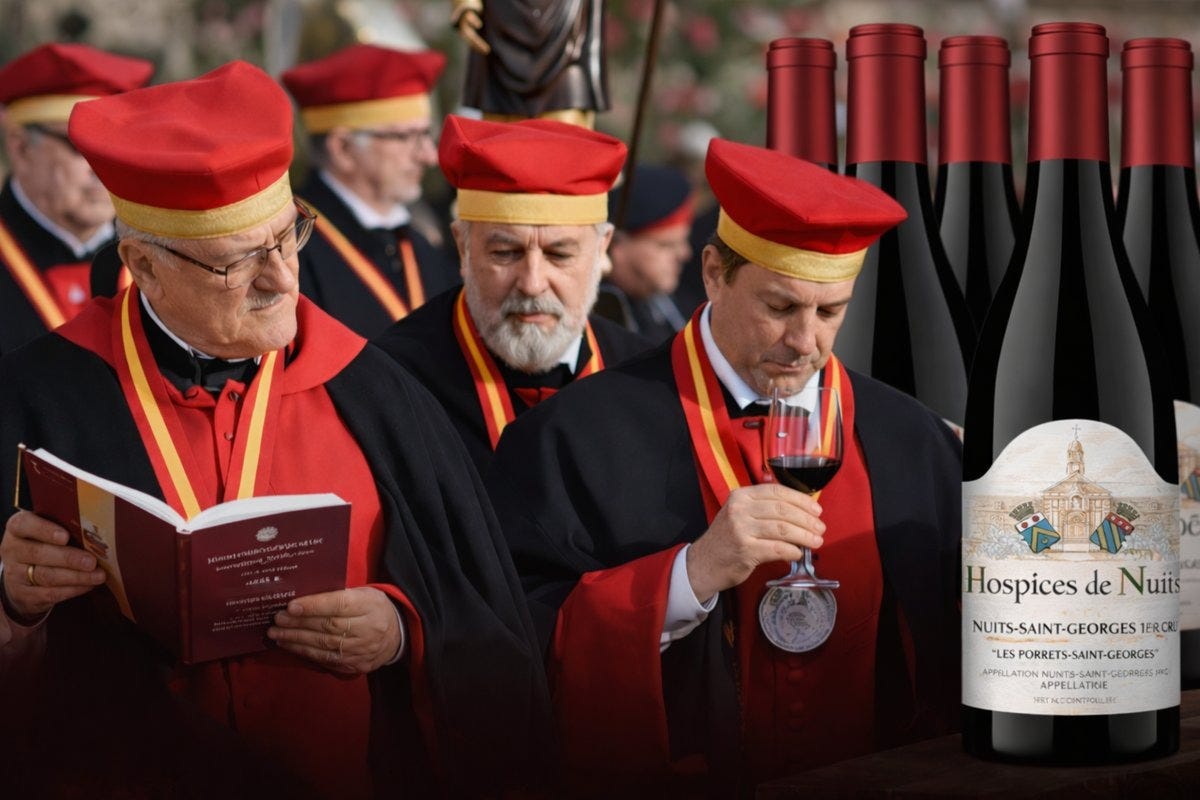
The members of the Confrérie des Chevaliers du Tastevin and a bottle from the Hospices de Nuits wine auction
The best-known route into en primeur buying in Burgundy is through the two great charitable auctions: the Hospices de Beaune and Hospices de Nuits. Both offer wines by the barrel, using the en primeur system, with proceeds directed toward charitable and medical institutions. Both take place annually. And both offer something beyond the wine itself: the experience of participating in a living tradition that has continued, with varying degrees of ceremony, for centuries.
The Hospices de Beaune auction, held on the third Sunday of November in the medieval Hôtel-Dieu, is the bigger and more famous of the two. The Hospices estate comprises vineyards donated by local benefactors across several centuries, now amounting to 60 hectares of Premier Cru and Grand Cru land across the Côte d’Or.
Wines are sold in 228-litre pièces, with proceeds benefiting the Hospices de Beaune hospital. Prices at auction vary by appellation and vintage; recent Premier Cru hammer prices have typically ranged from €20,000 to €40,000 per barrel. Added to that are the costs of the barrel, raising (élevage), auction commissions and other expenses. Per bottle prices typically work out around the $150 mark when bought in a consortium and often retail for $250 or $300 by the time the buyer receives them.
The Hospices de Nuits auction is older and smaller and a considerably more intimate event, held in mid-March in the ancient cellars of the Château du Clos-de-Vougeot. The hospital at Nuits-Saint-Georges dates to 1270 — earlier even than the one at Beaune — and the charitable dimension of the auction is directed toward the Institut Pasteur. Around 18 cuvées are typically offered, making it a more exclusive and less commercially prominent event than its November counterpart. For those who have attended both, the Nuits auction has a particular intimacy: a smaller room, a smaller crowd, and wines from some of the Côte de Nuits’s most characterful appellations.
How Purchasing Wine in a Consortium Works
Few individuals buy an entire barrel on their own. A 228-litre pièce of Burgundy yields approximately 300 bottles — often more than most collections require, and rather more capital than most buyers wish to commit to a single wine. The practical solution is a consortium: a group of buyers who share the cost and the bottles from a single barrel purchase.
A well-run consortium is straightforward in practice. For those purchasing en primeur this way, a merchant or specialist with strong relationships at the auction identifies the barrels most likely to represent quality and value in a given vintage, bids on behalf of the group, and subsequently manages the élevage, bottling, and distribution of the bottles to each participant. Each member of the consortium pays their share of the total costs plus the handling and bottling costs for the wine merchant, and receives their allocated bottles once the wine is ready.
The ratio of cost to reward in a consortium is significant. A share of 48 bottles from a Hospices de Beaune Premier Cru barrel at recent prices typically costs in the region of $7,000 — a per-bottle cost considerably below the retail price of the same wine once it is released on the open market. The bottles also carry a specific cuvée name, a lot number, and the audit trail of a single barrel — a provenance that has its own value for the serious collector.
The critical variable in any consortium is the quality of the specialist making the barrel selection. Buying at these auctions requires assessing young wines that are only weeks old, in conditions that are rarely ideal for tasting.
The judgement being exercised is not simply about the wine in the barrel today — it is about the vintage, the vineyard, the domaine’s recent form, and the likely trajectory of the wine over the years ahead. This is where years of relationships with Burgundy winemakers, and a track record of attending these auctions across multiple vintages, becomes the buyer’s most important asset.
The Honest Advice When Buying En Primeur Wine
En primeur buying is not without risk, and anyone who suggests otherwise is not giving you the full picture. The wine you are buying does not yet fully exist. Between the barrel and the bottle, things can and occasionally do go wrong: a wine can be compromised during bottling, wine storage conditions during élevage can affect development, or a vintage that showed promise early can simply fail to develop as expected.
The most reliable mitigation is the relationship with the buyer who is selecting on your behalf. A specialist who has attended the same auctions across a decade or more, who has tasted the wines of the same domaines across multiple vintages, and who has the cellar relationships to follow the wine from barrel through to delivery, is operating with a level of knowledge that significantly reduces the uncertainty.
The risk is never eliminated. It is managed — and for most of those who invest in en primeur, the combination of price, access, and participation more than justifies it. For those who also wish to buy and sell in the en primeur market, or explore selling en primeur wines before delivery, a specialist merchant can advise on the options available.
Brilliantly presented, with thanks!
The distinction between price, access, and participation is useful, but I kept thinking of Sara Danese’s recent retrospective on Cheval Blanc 2021. It sold well and was treated as an “obvious buy,” yet collectors are now sitting on substantial losses. That seems to challenge the idea that en primeur necessarily represents the lowest price a wine will ever command. Is participation ultimately the only rationale that survives when the investment case disappoints?